
Caffeine Anhydrous
Caffeine Anhydrous is also commonly listed as anhydrous caffeine, caffeine USP, or simply caffeine on supplement labels.
Caffeine Anhydrous is a highly concentrated form of caffeine commonly used in supplements for alertness, energy, focus, and exercise performance. It is studied most often for wakefulness, reaction time, endurance, and short-term performance effects. Important: Caffeine anhydrous is not a “special stronger caffeine molecule”, but it can be easier to dose aggressively and more quickly than caffeine from beverages, which is one reason labels need to be especially transparent.
What is Caffeine Anhydrous?
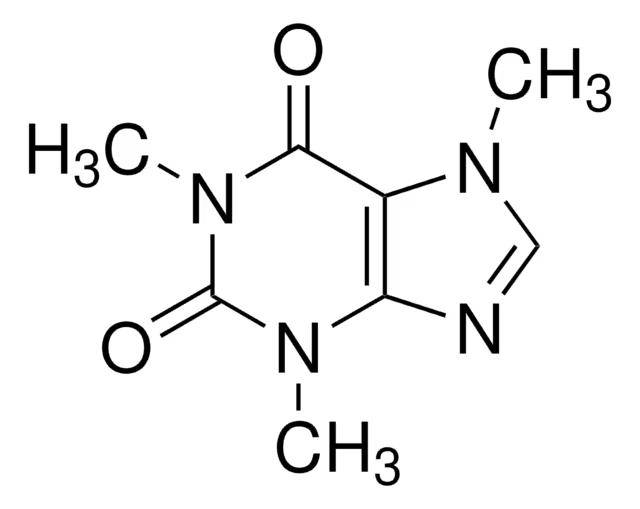
Caffeine anhydrous is a dehydrated powdered form of caffeine used in capsules, tablets, powders, and pre-workout formulas. “Anhydrous” simply means the ingredient is prepared without water, which helps create a stable, concentrated ingredient for supplement manufacturing.
Biologically, caffeine works mainly by blocking adenosine receptors. Adenosine is a signaling molecule involved in sleepiness and fatigue, so blocking its action can increase alertness, perceived energy, and willingness to perform mental or physical tasks. Caffeine can also influence catecholamine signaling and perceived effort, which helps explain its use in both nootropics and sports supplements.
Caffeine Anhydrous benefits and common uses
In supplements, Caffeine Anhydrous is usually positioned as an acute-performance ingredient rather than a long-term wellness ingredient. It is most commonly used for:
- Alertness and wakefulness: caffeine is one of the best-studied ingredients for helping people feel more awake and less sleepy in the short term.
- Exercise performance: caffeine may improve endurance, perceived effort, and some aspects of strength, power, or sport performance, though effects vary by person and context.
- Focus support: stimulant-based nootropic formulas often use caffeine for attention and task engagement, sometimes paired with L-theanine to moderate the feel.
- Weight-management formulas: caffeine is also used in “fat burner” products because it can modestly increase energy expenditure, but this should not be framed as a meaningful substitute for diet or training quality.
How it may feel for users
User experiences vary, but Caffeine Anhydrous is often described as a clean, obvious stimulant effect. Many users notice a faster or sharper-feeling onset than they do with slowly drinking coffee, especially when the dose is high or taken on an empty stomach.
When the dose is well matched, users may notice better wakefulness, stronger workout readiness, improved task focus, or reduced perceived effort. When the dose is too aggressive, users may instead notice jitters, anxiety, a racing heartbeat, nausea, or an unpleasant “wired” feeling.
Caffeine Anhydrous forms: standalone caffeine vs stimulant blends
The form matters because caffeine products differ less by “ingredient magic” and more by dose transparency and stack design.
- Standalone caffeine capsules or tablets: these are usually the easiest products to evaluate because the caffeine dose is clearly listed.
- Pre-workout blends: many formulas use caffeine anhydrous as the main stimulant, but quality varies a lot depending on whether the exact milligram amount is disclosed.
- Multi-stimulant formulas: products that combine caffeine with other stimulants or stimulant-like compounds can feel much stronger than the caffeine number alone suggests.
- Caffeine + L-theanine formulas: these are often marketed for smoother focus, though the experience still depends on the actual doses used and individual sensitivity.
That does not mean blends are automatically bad, but it does mean that exact caffeine disclosure matters far more than branding words like “energy matrix” or “neuro ignition blend”.
Caffeine Anhydrous dosage: typical ranges in supplements
Caffeine dosing should be judged carefully because the effective range and the “too much” range can overlap faster than many users expect.
- 100 mg: a common entry-level amount for wakefulness or light focus support.
- 150 mg to 200 mg: a very common range in nootropics, energy products, and pre-workouts.
- 200 mg to 300 mg: common in stronger pre-workouts, but much more likely to feel excessive in sensitive users.
- Research context: for exercise performance, caffeine is often studied relative to body weight, commonly around 3 to 6 mg per kg, which can be much higher than many casual users realize.
- Safety context: for most healthy adults, total daily caffeine intake up to about 400 mg/day is often cited as not raising general safety concerns, while single doses of about 200 mg are commonly referenced as acceptable for healthy adults.
NutriDetector generally prefers products that clearly state the exact caffeine amount per serving and do not force users to guess their stimulant load from proprietary blends.
Caffeine Anhydrous side effects and safety considerations
- Jitters and anxiety can happen: caffeine can increase nervousness, restlessness, shakiness, or feelings of being overstimulated, especially at higher doses.
- Sleep disruption matters: caffeine can meaningfully affect sleep quality and sleep onset, so late-day use is a common self-inflicted disaster.
- Heart rate and palpitations may increase: some users notice a racing heart, stronger heartbeat awareness, or feeling physically “amped” in a bad way.
- GI discomfort is possible: nausea or stomach upset can happen, especially with higher doses or when taken fasted.
- Tolerance develops: regular use can reduce the felt effect over time, and abrupt withdrawal may cause headaches, fatigue, or irritability.
- Pure concentrated caffeine is a real safety issue: FDA has warned specifically about highly concentrated powdered or liquid caffeine products because measuring errors can become dangerous very quickly.
Who should be extra careful with Caffeine Anhydrous?
Caffeine Anhydrous may deserve extra caution if you:
- are very sensitive to anxiety, panic-like symptoms, or palpitations;
- already struggle with sleep quality or insomnia;
- use multiple stimulants at once, including pre-workouts, fat burners, energy drinks, or nicotine;
- have a habit of taking “just one more scoop” when the first serving does not feel dramatic enough;
- are using products that do not clearly list their caffeine dose.
How NutriDetector evaluates Caffeine Anhydrous
NutriDetector scores caffeine-containing products based on what matters most for real-world safety and usefulness:
- Exact milligram disclosure: we strongly prefer labels that clearly state the caffeine amount per serving.
- No hidden stimulants in proprietary blends: undisclosed stimulant totals are a major red flag.
- Reasonable dosing: more caffeine is not automatically better, especially in products aimed at general consumers.
- Stack context: caffeine paired with L-theanine may be more practical for some users than caffeine stacked with multiple harsh stimulants.
- Less hype, more clarity: “instant laser focus”, “insane energy”, or “hardcore thermogenic” are not quality signals.
Pixie-dusting and label tricks
Caffeine is one of the few ingredients where hidden dosing can become a safety problem, not just a value problem.
- Never trust vague “energy blend” wording: if the exact caffeine amount is not disclosed, users cannot sensibly judge the product.
- Watch the serving-size trick: some labels look moderate until you realize the “full clinical serving” is two scoops, not one.
- Check total stimulant stacking: caffeine may be combined with other stimulants or stimulant-like ingredients, which can change the real-world feel a lot.
- Do not confuse “natural caffeine” with inherently gentler caffeine: from a stimulant standpoint, the dose usually matters more than whether the label sounds earthy and wholesome.
FAQ
Is Caffeine Anhydrous stronger than coffee?
Milligram for milligram, caffeine is caffeine. The difference is that caffeine anhydrous in supplements can make it easier to take a large dose quickly and precisely, which may feel sharper than drinking coffee gradually.
How much Caffeine Anhydrous is too much?
It depends on the person, but for most healthy adults, around 400 mg of total caffeine per day is commonly cited as a general upper level that does not raise safety concerns. Many people will feel overstimulated well before that, especially in a single serving.
Does Caffeine Anhydrous help workouts?
It can. Caffeine is one of the better-studied performance ingredients for endurance and some other exercise outcomes, but the effect depends on dose, timing, training context, and individual response.
Should caffeine always be paired with L-theanine?
Not always, but it is a common pairing in nootropic products. Some studies suggest the combination may support attention and alertness with a smoother subjective feel for some users, though it is not a universal fix for excessive caffeine dosing.
📚 Scientific References & Safety Sources
- EFSA safety opinion on caffeine intake: Caffeine: EFSA estimates safe intakes. [EFSA Summary]
- FDA consumer guidance on caffeine limits: Spilling the Beans: How Much Caffeine is Too Much? [FDA Consumer Update]
- FDA warning on concentrated caffeine products: Pure and Highly Concentrated Caffeine. [FDA Warning]
- Sports performance position stand: International Society of Sports Nutrition Position Stand: Caffeine and Exercise Performance. [ISSN Position Stand]
- L-theanine and caffeine attention study: L-Theanine and Caffeine in Combination Affect Human Cognition as Evidenced by Oscillatory Alpha-Band Activity and Attention Task Performance. [Journal of Nutrition]
- Recent systematic review and meta-analysis on tea bioactives including L-theanine + caffeine: Effects of Tea (Camellia sinensis) or its Bioactive Compounds L-Theanine or L-Theanine plus Caffeine on Cognition, Sleep, and Mood in Healthy Participants. [Systematic Review]